The Dept. of Justice Calls in the Big Guns to Combat Voter ID Laws
 |
| Photo by www.acslaw.org |
It’s difficult to exaggerate the prominence Stanford Law Professor Pam Karlan enjoys within the progressive legal community. Karlan is one of the most active members of the Supreme Court bar — among other things, she co-authored the brief that convinced the justices to strike down the anti-gay Defense of Marriage Act last June. She is a former litigator for the NAACP Legal Defense Fund, and she is among the most widely regarded voting rights experts in the nation. If President Obama had shown more courage in the early years of his presidency, or if Senate Democrats had deployed the nuclear option sooner, she would be a federal appellate judge today. Many Court watchers, including myself, would choose her if we could place only one person on the Supreme Court.
So when the Justice Department revealed on Friday that Karlan would become the nation’s top voting rights attorney, it was as if Marsellus Wallace called up the many voters being disenfranchised in states like Texas and North Carolina, and told them that he’s sending The Wolf. READ MORE from ThinkProgress
States That Have Enacted Voter ID Laws Since Republicans Gained Many Governorships and Control of State Legislatures in 2011
In an article by Brenner Center for Justice at New York School of Law - Summary of Voter ID Laws Passed state laws are summarized:
Alabama, Kansas, Mississippi, New Hampshire, Pennsylvania, Rhode Island,
South Carolina, Tennessee, Texas, Virginia, and Wisconsin all passed
new voter ID laws in their 2011, 2012, or 2013 legislative sessions.
For each state, this memorandum provides: a brief description of the
substance of the new law; its effective date; the types of photo IDs
accepted; exceptions to the ID requirement, if any; any affidavit
alternative to providing a photo ID; the photo ID requirements for early
and absentee voting, if any; provisions relating to obtaining free ID;
and public education requirements.[1]
[1] For purposes of this memorandum, “exceptions” to the photo ID
requirement refers to categories of voters exempted from providing photo
ID to vote. An “affidavit alternative” is a procedure whereby certain
voters without qualifying ID can execute an affidavit to either obtain a
regular ballot or to accompany a provisional ballot in lieu of
providing photo ID.
Here are just a few of the summaries:
NORTH CAROLINA
Effective Date: Starting in January 2014, poll officials will ask voters for a photo ID (and give notice it will be required in 2016) but no photo ID is required to vote until January 2016.Acceptable Forms of ID
Every qualified voter shall present photo ID bearing reasonable resemblance to that voter to a local election official before voting. “Photo identification” means any of the following that contains a photograph and that shall have an expiration date and be unexpired, provided that people over 70 may use an expired ID that was unexpired on their 70th birthday. For ID (4) through (6), no expiration date is required if the issuance date is fewer than 8 years before it is presented.
- North Carolina driver’s license, including learner’s permit or provisional license.
- Special non-operator’s identification card
- Passport
- Military identification card (no requirement that it have a printed expiration or issuance date)
- Veteran’s identification card (no requirement that it have a printed expiration or issuance date).
- Tribal enrollment card
- A driver’s license or nonoperator’s identification card issued by another state if the voter’s voter registration was within 90 days of the election.
- People who, because of age or disability, are permitted to use curbside voting.
- Religious objectors who have filed a declaration at least 25 days before the election, or who sign declaration in-person at county board of elections after voting provisional ballot.
- Victims of natural disaster resulting in disaster declaration and occurring within 60 days of the election
- Law contains no affidavit alternative.
- Provisional ballot counted if acceptable ID is presented in person at the county board of elections by noon on the day prior to convening of the election canvass.
Registered voters who do not have acceptable photo ID may sign a declaration to such effect and shall be issued an ID card for free after their registration is verified. Such declaration, if false or fraudulent, is a Class I felony.
- Permits challengers to challenge a voter for failure to present photo ID.
- Expands types of facilities offering voter registration services
- Creates Voter Information Verification Advisory Board to assist in election administration.
Public Education Requirements
The Elections Director “may advertise the availability and the use of the [voter ID] card,” but this is not required.
NEW HAMPSHIRE
Effective Date: New Hampshire’s law was first passed on June 27, 2012, after the legislature overrode a gubernatorial veto. In 2013, the list of acceptable forms of ID was amended further, and the effective date is now September 15, 2013.Photo IDs Permitted
Prior to voting, a voter must provide one of the following valid forms of photo ID (the name on the ID must be “substantially similar” to that of the voter registration record):
- A driver’s license issued by the state of New Hampshire or any other state;;
- An identification card issued by the director of motor vehicles;
- A United States armed services identification card;
- A United States passport or a passcard;
- Any other valid photo identification issued by federal, state, county, or municipal government;
- A valid student identification card (all student identification cards issued after January 1, 2014 are required to have a date of issuance; in all elections before September 1, 2018, student ID cards without a date of expiration or issuance will still be acceptable);
- A photo identification not authorized specifically above, but determined to be legitimate by the supervisors of the checklist, the moderator, or the town or city clerk
Non-Photo IDs Permitted
Verification of the person’s identity by a moderator, supervisor of the checklist, or the town or city clerk is also acceptable.
Affidavit Alternative
There is a qualified voter affidavit that can be filled out and submitted in lieu of presenting photo identification. If the voter submits an affidavit, the voter can cast a regular ballot and a letter of identity verification will be sent by the Secretary of State. The letter will be mailed 60 days after the election, unless it is a primary in which case the letter will be mailed 60 days after the general election, and if the election is a regularly scheduled municipal election, the letter will be mailed by the July 1 or January 1 next following the election.
The Secretary of State will mark the envelope with instructions to the U.S. Post Office not to forward the letter and to provide address correction information. The letter will notify the person that someone who did not present valid photo identification voted using his or her name and address, and instruct the person to return the letter within 90 days which a written confirmation that the person voted, or contact the attorney general immediately. Any letters that are returned as undeliverable or any letters returned saying the person did not vote will be referred to the attorney general for an investigation into fraudulent voting.
Free IDs
The fee for voter identification cards will be $10, with exceptions for people who turn in his or her driver’s license before its expiration date if they are over 65. A person who requires a photo identification card for voting may obtain a voucher from his or her town or city clerk or the Secretary of State exempting the person from the fee.
Public Education Requirements
The Secretary of State will prepare an explanatory document explaining the proof of identity requirements, and will provide copies of the document to all towns and wards so it will be available to all persons registering to vote and at polling places at each election. The Secretary of State will take whatever measures he or she deems necessary to educate the public including displaying the information on the Department of State’s website, and will provide explanatory information to media outlets that request the information and encourage such outlets to assist the department in educating the public.
Editor's Note: While most Voter ID Laws are being passed by Republican Governors, New Hampshire’s law was first passed on June 27, 2012, after the legislature overrode a gubernatorial veto.
______________________________________________________________________________PENNSYLVANIA
Effective Date: The law was passed with an effective date of March 14, 2012, but it was challenged in Pennsylvania state court and is subject to a preliminary injunction. Under the terms of that injunction, voters may be asked for photo ID at the polls during the November election but voters lacking such ID can still vote a regular ballot.Photo IDs Permitted
Prior to voting, a voter must provide one of the following valid forms of photo ID:
- Photo ID issued by the department of transportation that is not more than twelve months past the expiration date;
- Unexpired photo ID issued by the U.S. government that includes an expiration date;
- U.S. military photo ID that does not contain an expiration date, but notes that the expiration date is indefinite;
- Unexpired municipal employee Photo ID that includes an expiration date;
- Unexpired student photo ID from an accredited public or private higher education institution that includes an expiration date; or
- Unexpired photo ID from certain state care facilities that includes an expiration date.
A voter who has a religious objection to being photographed must provide a valid-without-photo driver’s license or a valid-without-photo ID card issued by the department of transportation.
Limited Exception for Indigent Voters
A voter who is unable to produce the required ID on the grounds that he or she is indigent and cannot obtain such ID for free must cast a provisional ballot, and provide an affirmation to the county board within six days, affirming his or her identity and indigent status, or the ballot will not count.
Absentee Voting ID Requirements
An absentee voter who has been issued a current and valid driver’s license must provide his or her license number. An absentee voter who has not been issued a current and valid driver’s license can provide the last four digits of his or her social security number. A qualified absentee voter who is entitled to vote by absentee ballot under the Uniformed and Overseas Citizens Absentee Voting Act or by an alternative ballot under the Voting Accessibility for the Elderly and Handicapped Act will not be required to provide proof of ID.
Free IDs
The department of transportation must issue free voter ID cards to any registered voter who provide an affirmation that they lack the ID the law requires and require ID for voting purposes.
Public Education Requirements
Between the effective date of the law and September 17, 2012, the photo ID specified in the law will be requested but not required. During this time frame, if any voter who will be required to produce photo ID starting on September 17, 2012 is unable to produce the photo ID requested, election officials will provide him or her with written information about the new law’s requirements.
________________________________________________________________________________
One of the states laws NOT summarized in the report by the Brennan Center for Justice at New York Law School is Texas' Voter (suppression) ID law and discriminatory gerrymandering.
In a June 25, 2013 Huffington Post article "Harsh Texas Voter ID Law "immediately" Takes Effect After Voting Rights Act Ruling: WASHINGTON -- Texas will "immediately" enact a voter ID law that a panel of federal judges ruled last year would impose “strict, unforgiving burdens on the poor," a top state official said Tuesday. The decision to go forward with a measure that those federal judges called “the most stringent in the country" comes after the Supreme Court ruled that a key provision of the landmark Voting Rights Act was unconstitutional.
In blocking those redistricting maps last year, a separate panel of federal judges ruled that the government "provided more evidence of discriminatory intent than we have space, or need, to address" in their opinion. Attorney General Eric Holder cited the Texas redistricting case in his statement criticizing the Supreme Court's ruling.
In a CBS News/AP release on August 30, 2012 "Texas' Voter ID Law Struck Down in Federal Court they addressed the Voter ID Law and the redistricting (gerrymandering) that's happening in Texas.
"The court ruled that the new voter identification law in Texas would have an unconstitutional impact on the right to vote for poor people and especially Hispanics and African-Americans - the same minorities who were protected earlier in the week from Republican redistricting by another federal court panel.
This is the third court ruling in the past three days out of the federal courts striking down Republican voter laws. A federal panel on Wednesday blocked a Florida registration measure from continuing in effect. South Carolina's strict photo ID law is on trial in front of another three-judge panel in the same federal courthouse. A court ruling in the South Carolina case is expected in time for the November election.
An appeal is likely in the Texas case, but there is no guarantee that the U.S. Supreme Court is going to want to get involved in this case, or any of these voting rights case, before the election. On the other hand, the justices in 2008 said that states could impose some voter identification restrictions.
Federal court finds discrimination in new Texas voting maps Earlier in the week, Texas' voting districts were thrown again into upheaval after a federal court found evidence of discrimination in new district maps drawn and approved by the state's Republican-controlled Legislature last year.
The U.S. District Court in Washington wrote in a 154-page opinion that the maps don't comply with the federal Voting Rights Act because state prosecutors failed to show Texas lawmakers did not draw congressional and state Senate districts "without discriminatory purposes."
The ruling applies to the maps originally drawn by the Legislature in 2011, and not interim maps drawn by a San Antonio federal court that are to be used in the upcoming elections this November.
CBS News legal analyst Andrew Cohen said the Supreme Court likely will have the final say the case of voting maps, and it's been quite supportive of Republican redistricting efforts in the recent past. There's likely to be some sort of expedited appeal.
This ruling was a blow to the GOP because it keeps in place the current voting districts."
 |
| Chart by www.washingtonpost.com |
Profiles of the (some of the) 37 Republicans the could Lose Their Seats for Shutting Down the Government
Another problem Democrats have in taking back the House in 2014 is gerrymander, in addition to the Suppressive, discriminatory Voter ID laws. But the Republicans can sometimes be their own worse enemies. For example when they allowed the far right-wing of their party to run a campaign to shut down the government in yet another attempt to repeal the Affordable Care Act (Obamacare.) This was a strategy that now even the TeaPublicans that pushed it, admit they "didn't really" think it would work. Speaker of the House of Representatives finally stood up to the outside "groups" like Heritage Action, Club for Growth, and Freedom Works, after the federal budget agreement by House Budget Chairman Paul Ryan and Senate Budget Committee Chairwomen Patty Murray was passed. We'll have to see if people can remember the shutdown when the all-important 2014 elections come to pass. This writer will remind Americans from time-to-time who really was responsible for the government shutdown despite the outrageous claims of the unstable TeaPublicans and the money-making, don't care what they say is outright lies, the more sensational the lies the bigger the ratings, Fox News commentators and Reporters.
Cook Partisan Voting Index: R+4
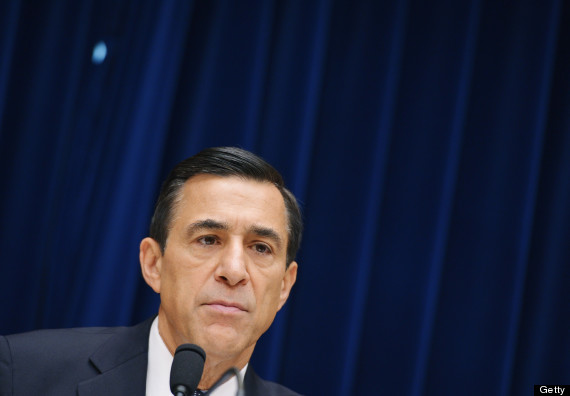
Romney won the district with 52.4 percent of votes in 2012, but Barack Obama won 49 percent of votes in 2008, beating out McCain by 1 percent.
4. Colorado -- District 3: Rep. Scott Tipton
Cook Partisan Voting Index: R+4
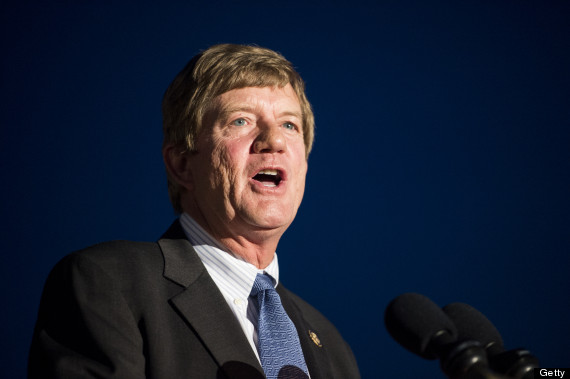
Romney won 51.8 percent of Tipton's district in 2012.
5. Florida -- District 7: Rep. John L. Mica
Cook Partisan Voting Index: R+5

Although Republicans have won the district's presidential vote since 1992, with Romney securing 51.8 percent of votes in 2012, the district's significant proportion of independent voters may contribute to a turn toward Democrats.
6. Florida -- District 15: Rep. Dennis Ross
Cook Partisan Voting Index: R+8

Republicans have dominated the district’s congressional politics since 1995. In 2012, Romney won 53.3 percent of the district's votes.
For profiles on all 37 Republicans that could lose their jobs because of shutting down the government see Huffington Post - Meet the 37 Republicans... from 10/24/2013.
Find and contact YOUR Congressmen/women and U.S. Senators here https://www.govtrack.us/ to tell them how you feel about Voter (suppression, disenfranchisement) ID Laws and Gerrymandering, as well as the Fair Minimum Wage Act, Jobs, Immigration Reform and other issues that concern you.


